
Walk into any branding workshop and within the first hour someone will say the brand needs to be “more authentic” or “warmer” or “more confident.” Useful adjectives, except for one problem: those are personality traits, not strategy. They describe how the brand should sound, not who the brand is supposed to be.
This is the most common — and most expensive — mistake in brand work. Teams start at the surface (tone, voice, look and feel) and try to reverse-engineer a foundation from it. The foundation never quite holds, because it was built after the house.
Brand archetypes and brand personality are not the same thing, they don’t operate at the same level, and the order in which you build them determines whether the brand has any structural integrity at all. Most marketers know both terms. Very few use them in the right sequence.
This is what each one actually does, where the confusion comes from, and why building backwards is more common than getting it right.
Two Different Frameworks, Two Different Jobs
Brand archetypes and brand personality come from different academic lineages and answer different questions. That distinction matters because it tells you which one comes first.
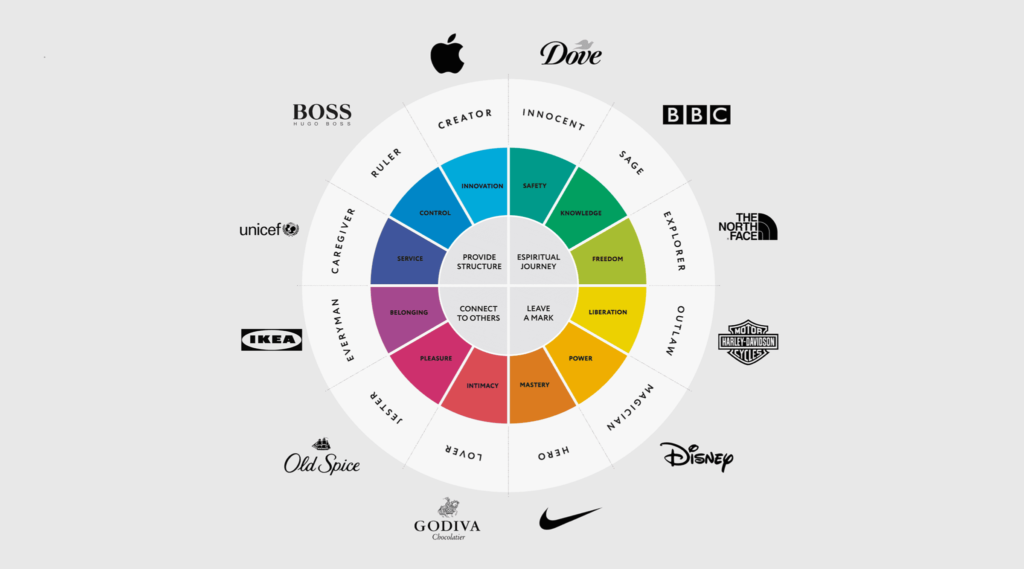
The 12 brand archetypes — Hero, Sage, Outlaw, Caregiver, Magician, Innocent, Explorer, Lover, Jester, Everyman, Ruler, Creator — were systematized in The Hero and the Outlaw by Margaret Mark and Carol S. Pearson (McGraw-Hill, 2001), drawing on Carl Jung’s theory of the collective unconscious. The framework identifies twelve recurring psychological characters that humans recognize across cultures, mythologies, and storytelling traditions. It answers a strategic question: what role does this brand play in the life of its audience?
Brand personality, as a measurable construct, was formalized four years earlier. In her landmark paper “Dimensions of Brand Personality,” published in the Journal of Marketing Research in August 1997, Stanford professor Jennifer Aaker identified five dimensions that describe how consumers perceive brands as if they were people. The study was based on 631 participants rating 37 brands across 114 personality traits, and produced what is now the dominant academic model of brand personality:
Sincerity — down-to-earth, honest, wholesome, cheerful Excitement — daring, spirited, imaginative, up-to-date Competence — reliable, intelligent, successful Sophistication — upper class, charming Ruggedness — outdoorsy, tough
Aaker’s model answers a different question: how does this brand express itself, and how is it perceived? It deals with traits, not roles. It describes behavior, not motivation.
This is the core difference: archetype is who the brand is. Personality is how the brand shows up. One is strategic. The other is expressive.
The Order That Most Brands Get Wrong
Treating archetype and personality as competing frameworks misses the point. They are layered, not parallel.
Consider how the same archetype can be expressed through different personality dimensions:
A Sage brand can lean toward Competence (reliable, intelligent, successful) — this is Google, presenting itself as the authoritative search engine that organizes the world’s information. The same Sage archetype can lean toward Sincerity (honest, wholesome), this is the way a brand like NPR positions itself. Same role, different expression.
A Hero brand can lean toward Excitement (daring, spirited) — this is Nike, urgent and bold. Or it can lean toward Ruggedness (outdoorsy, tough) — this is something like Jeep, where heroism is expressed through endurance rather than performance.
A Caregiver brand can lean toward Sincerity (Dove, Johnson & Johnson) or toward Sophistication (a luxury healthcare brand positioning itself as protective but premium). The role is the same; the expression differs.
This is why the two frameworks aren’t redundant. The archetype tells you what the brand stands for. The personality tells you how it talks about it. Without both, you have either a strategy with no voice, or a voice with no strategy.
How Archetype And Personality Actually Interact
If you’ve ever worked on a brand project that produced a beautiful tone-of-voice document but somehow still felt vague six months later, you already know what happens when these two layers are confused.
The typical sequence in most companies looks like this:
Someone picks adjectives for the brand voice, “warm but expert,” “friendly but premium,” “bold and confident.”
Designers translate those adjectives into visual identity.
Copywriters translate them into messaging.
Six months later, no one can articulate what the brand stands for, only what it sounds like.
The reason this fails isn’t that personality is wrong. It’s that personality without archetype is decoration without architecture. You’ve decided how the brand should behave, without deciding what the brand exists to do. Two brands can both be “warm and expert” and stand for completely opposite things. The personality traits tell you nothing about the strategic role the brand plays.
The correct sequence is the inverse:
Archetype first — define what role the brand plays for its audience. This is a positioning decision, not a creative one. A Caregiver brand and a Ruler brand can sell the same product, but they are not the same brand.
Personality second — define the traits through which the archetype expresses itself. A Caregiver brand can be sincere and warm, or competent and reassuring, or sophisticated and protective. The archetype is constant; the personality is the expression layer.
Voice and identity third — the operational decisions about copy, design, photography, and tone that bring both layers to life.
This sequence isn’t theoretical. It’s the difference between a brand that has coherence across every touchpoint and a brand that has consistent fonts.
Why The Backwards Approach Persists
If the correct order is so clear in theory, why do most brands still build personality before archetype?
Three reasons, and they’re worth naming because they show up in almost every brand engagement.
Personality feels concrete; archetype feels abstract. “Warm and confident” feels like a decision you can make on a Tuesday. “We are a Sage with Magician undertones” feels like something you need a workshop and a strategist for. Teams default to the layer they can describe immediately, even when it’s the wrong starting point.
Personality produces visible output faster. A tone-of-voice document can be drafted in a week. A genuine archetype decision often takes months of internal debate because it forces a brand to commit to what it isn’t — and brands resist exclusion.
Personality is easier to copy. You can study a competitor’s tone of voice and approximate it. You cannot study a competitor’s archetype and steal it, because the archetype is bound up with strategy, audience, and meaning. The shortcut to looking like a strong brand is to mimic personality. The shortcut doesn’t work, but it’s everywhere.
The result is a generation of brands that all sound vaguely similar — “warm but expert,” “bold but approachable,” “premium but accessible” — because they all built the same personality layer without any underlying archetypal differentiation.
How Archetype And Personality Actually Interact
A brand built in the correct sequence produces decisions that feel inevitable rather than negotiated.
Apple is widely categorized as primarily a Magician archetype with Creator undertones. That positioning predates every personality decision they’ve ever made. Once that archetype is locked in, the personality expression follows almost automatically: a tone that is confident and visionary (Excitement), refined and elevated (Sophistication), and never folksy or down-to-earth (which would be Sincerity, the wrong dimension for the archetype). Every design choice, every product launch, every keynote ladders up.
Patagonia operates as a primarily Explorer archetype with strong Caregiver undertones around environmental responsibility. The personality expression draws from Ruggedness and Sincerity — never Sophistication, never Excitement in the urgent, performance-oriented sense. The archetype came first. The personality layer is the visible expression of it.
When archetype is the foundation, personality becomes a decision tool. When personality is the foundation, every campaign starts as an open debate.
Why This Matters Strategically
The cost of building backwards isn’t aesthetic. It’s operational.
A brand without a clear archetype but with a defined personality will produce content that sounds consistent but lacks direction. Marketing decisions become matters of taste rather than strategy. New campaigns feel like they need to be reinvented every time because there’s no strategic gravity pulling them toward a center.
A brand with a clear archetype but a vague personality will know what it stands for but struggle to express it. Decisions about voice, design, and content become bottlenecks because the expression layer was never properly defined.
A brand with both, in the right order, has something most brands don’t: a system. Every new piece of content, every campaign, every hire, every partnership can be tested against two questions — does this align with our archetype, and does this express our personality? When both answers are yes, the brand compounds. When either is no, the inconsistency shows up immediately, and the team knows why.
This is the difference between brands that build equity over time and brands that have to keep restarting from scratch.
Archetype first, the strategic decision about what role your brand plays in the life of your audience.
Personality second, the expression layer that turns that role into a voice people can recognize.
Most brands have spent months on the personality layer without ever properly settling the archetype. If your marketing feels like it’s constantly being re-decided, that’s why.
That’s the work I do under brand positioning — and the right place to start is a conversation.
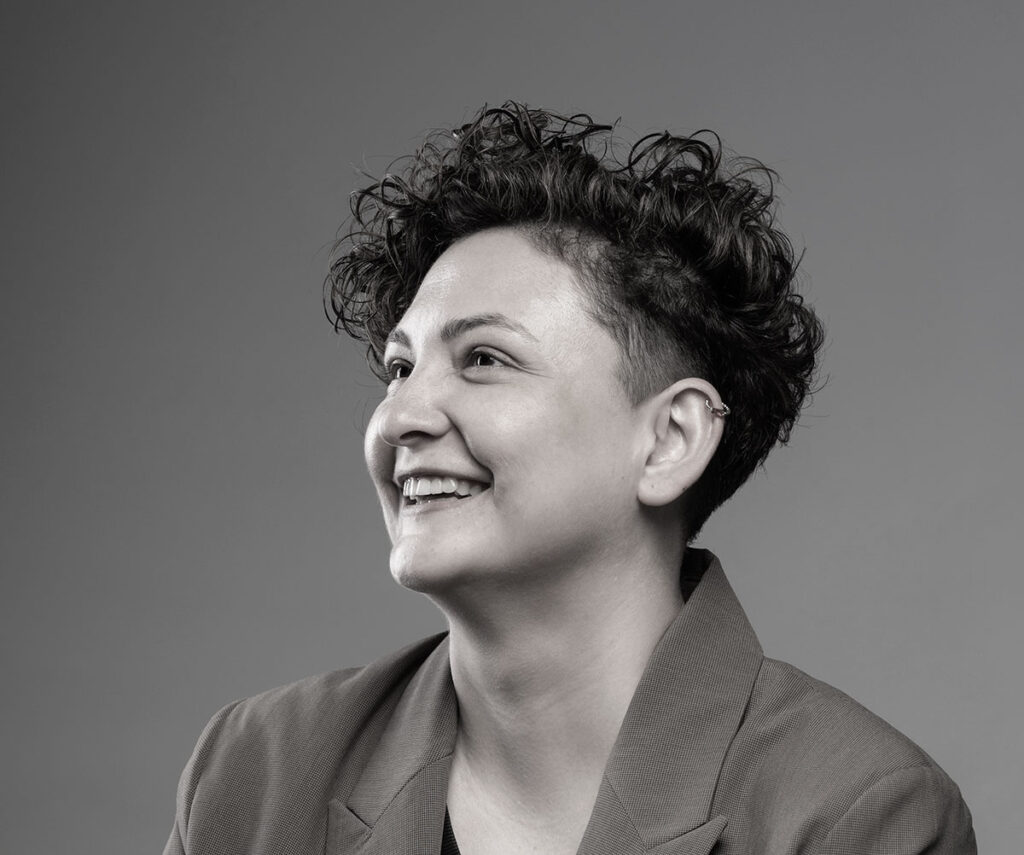
Afroditi Arampatzi
Marketeer
Hi, I’m Afroditi.
I’m the founder of Sustainable Growth, a Thessaloniki-based consultancy specializing in performance marketing and brand strategy.
I help businesses strengthen their brand positioning and apply AI-driven solutions that support smarter marketing, better decision-making, and sustainable growth.