


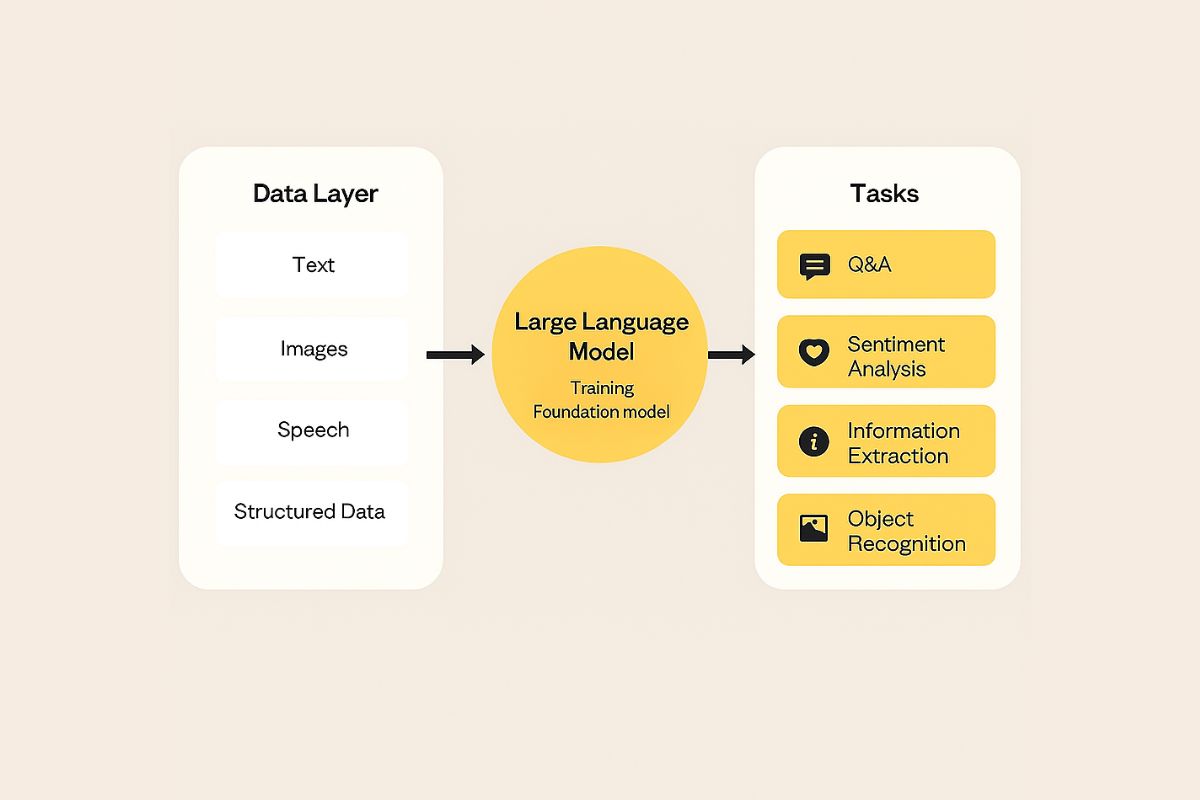
A Large Language Model (LLM) is a type of AI foundation model trained on massive text corpora to predict and generate human-like language. At their core, LLMs learn statistical patterns syntax, semantics, and context from billions of words, enabling them to compose coherent text, answer questions, and even craft code (en.wikipedia.org). The most advanced LLMs (e.g., OpenAI’s GPT family, Google’s Gemini, Meta’s LLaMA) leverage architectures such as transformers and techniques like reinforcement learning from human feedback to refine their outputs for usability and safety.
From GEO to LLM SEO: Optimizing for AI-Driven Discovery
Generative Engine Optimization (GEO) is the umbrella discipline of optimizing content, structured data, APIs, and brand signals to surface in AI-powered search interfaces chatbots, voice assistants, AI-driven search pages, and more. Within GEO, LLM SEO specifically targets language-model–based systems: tailoring your online presence so that LLMs “cite” your brand or website when composing answers. Think of GEO as the entire bookstore of generative search opportunities; LLM SEO is the cookbook section, focused on recipes (prompts) that lead AI to your content.
How LLMs Are Transforming SEO
Traditional SEO tactics keyword density, backlink building, and on-page optimizations now share the stage with content designed for direct answers and conversational prompts. AI tools like ChatGPT and Google’s SGE often bypass link listings entirely, delivering zero-click summaries and citations directly in the interface. As a result, brands must adapt by producing high-quality, semantically rich content that LLMs can parse and retrieve accurately, rather than relying on volume or keyword stuffing
Driving Brand Growth with LLM SEO
Being featured in LLM-generated responses offers unparalleled brand visibility at the very moment a user seeks an answer. According to Harvard Business Review, brands that optimize for LLMs gain “resolution” over mere “attention,” positioning themselves as the definitive solution in AI-driven dialogues. Early adopters report increased trust signals—E-A-T (Expertise, Authoritativeness, Trustworthiness), structured citations, and API integrations all of which bolster both AI and human perceptions of brand credibility.
Top User Questions about LLM SEO
- AI mention share: percentage of AI responses citing your brand (via tools like Further’s Presence Score).
- Zero-click engagement lift: increases in branded queries answered without clicks, measured via conversational analytics.
- Rich snippet visibility: growth in FAQ, How-To, and Q&A markup impressions across search consoles.
- API call volume: frequency of LLM requests to your data endpoints (if available)
1. What exactly is LLM SEO, and how does it differ from traditional SEO?
Answer: LLM SEO focuses on optimizing your content for language-model–based systems (e.g., ChatGPT, Claude, Gemini), ensuring AI “pulls” your brand into answers via citations or direct mentions. Traditional SEO optimizes for keyword rankings and link visibility in web-page listings. LLM SEO instead emphasizes:
- Answer-centric content: clear question–answer formatting and structured snippets.
- Trust signals: E-A-T markers, schema markup, and high-authority citations.
- API & integration readiness: data endpoints that LLMs can query directly
2. Why should brands invest in LLM SEO now?
Answer: AI-powered search is rapidly capturing user queries: surveys show up to 40 % of searches complete without a click, and generative AI traffic has grown over 1 200 % in recent months (surferseo.com). By optimizing for LLMs, brands secure prime placement in AI responses—driving higher-intent engagements, improving brand recall, and future-proofing against shifting search behaviors.
3. How do I optimize my content for LLMs?
Answer: Key tactics include:
- Use clear, conversational headings and FAQs. Structure your pages with exact questions and succinct, comprehensive answers—ideal for AI retrieval.
- Implement structured data (schema.org). Supply LLMs with machine-readable context: product info, reviews, how-tos, and Q&A markup.
- Leverage authoritative backlinks and citations. AI systems favor sources with strong E-A-T signals; cultivate high-quality mentions in reputable outlets.
- Offer API endpoints or data feeds. Enable direct LLM access to live data (e.g., pricing, stock levels) to increase the chance of real-time citations .
4. Will LLM SEO replace traditional SEO?
Answer: Not entirely. While LLM SEO addresses conversational and generative interfaces, traditional SEO remains vital for web-page rankings and organic traffic. The two disciplines converge: content must satisfy both link-based algorithms and AI-driven answer engines. Integrated strategies yield the best results—ensuring presence across classic SERPs and LLM responses alike (en.wikipedia.org).
5. How can I measure the success of my LLM SEO efforts?
Answer: Track metrics such as:
LLM SEO is the next frontier in digital marketing—melding AI-driven answer delivery with brand storytelling to capture attention at the point of need. By understanding LLM architectures, aligning content for direct retrieval, and implementing robust trust signals, marketers can drive superior brand growth in an increasingly conversational search landscape.
Ready to put LLM SEO to work for your brand? Dive deeper into our strategies and start transforming AI-driven searches into real growth – follow me for more insights.

Afroditi Arampatzi
Marketeer
Hi, I’m Afroditi!
An experienced marketer with a passion for driving impactful projects and delivering strategic solutions.
With over 15 years of hands-on experience in project management, I specialize in advertising, data analysis, strategic planning, and team leadership.


)